Narrow Entryway? Here's How to Style 18 Inches of Wall
A wall hook trio, a slim console alternative, and the basket that solves shoe pile-up forever.
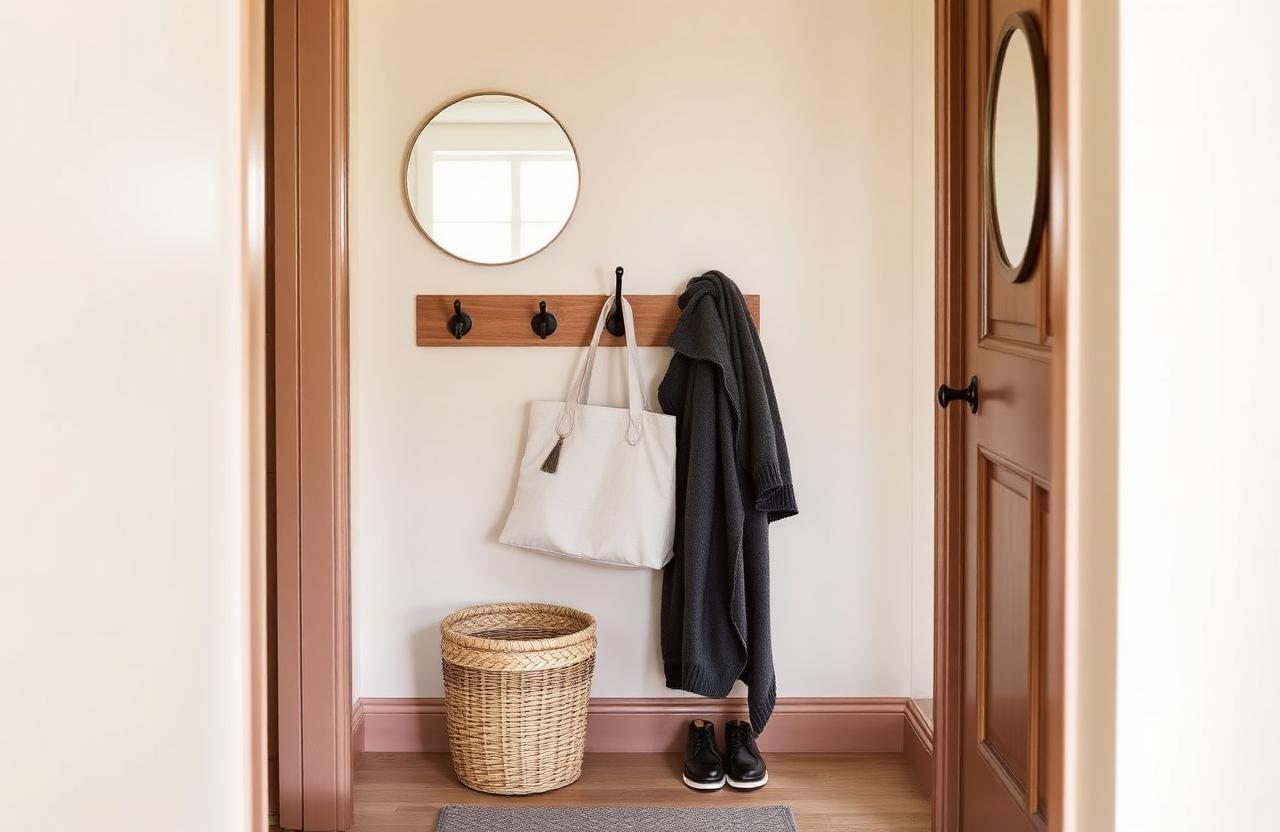
My entryway is exactly eighteen inches deep. Not a real room — more of a landing strip between the front door and the hallway. For years I ignored it, which meant shoes piled by the door, coats on the floor, and keys lost daily. Then I finally spent a weekend figuring out how to make eighteen inches functional. Here's what worked — and the one thing I wish I had done sooner.
The anatomy of a narrow entryway
A narrow entryway can't accommodate a console table, a coat rack, a bench, and a mirror. You have to choose. The trick is deciding what you actually need every time you leave or enter the house: a place for keys, a hook for your bag, somewhere to drop shoes, and maybe a mirror for a last-minute check. Those four functions are all you need; everything else is decoration.
My strategy: go vertical. Hooks on the wall, a small shelf for keys and mail, a basket on the floor for shoes. Nothing deeper than six inches. The key is using every square inch of wall space while leaving the floor clear enough to walk through comfortably.
Three hooks, no excuses
Wall hooks are the backbone of any narrow entryway. I mounted three black iron hooks at chest height: one for my everyday bag, one for my partner's jacket, one for the dog leash. Coats that rotate seasonally hang in the closet; daily-use items live on hooks by the door. Total cost: about twenty dollars for a set of heavy-duty hooks.
A floating shelf replaces a console table
A twelve-inch floating shelf mounted just below the hooks gives you surface area without floor depth. I use mine for a small dish (keys, wallet), a tiny plant, and a candle. It takes up almost no room and solves the 'where do I put my stuff' problem instantly. Pair it with a round mirror above to bounce light and give the space depth.
One basket solves the shoe pile
A low woven basket or bin tucked against the wall holds four to six pairs of shoes — the ones in daily rotation. Everything else stays in a closet. The basket gives shoes a home that isn't the middle of the floor, and it looks intentional instead of chaotic. When guests arrive, I slide the basket to the side; when they leave, shoes go back in.
"A narrow entryway isn't a limitation — it's a filter. Only what you need every day gets a spot."
— Jordan Reyes
Frequently asked questions
What if I don't have any wall space?
Use the back of the door. An over-the-door hook rack can hold bags, umbrellas, and jackets. It's not as elegant, but it works when you have zero wall clearance.
How do I keep mail from piling up?
Don't give mail a permanent home in the entryway. Touch it once — either deal with it immediately or move it to an 'inbox' tray elsewhere in the house. Mail by the door just creates visual clutter.
Is a rug necessary?
In a narrow entryway, a rug can make the space feel smaller. If you want one for shoe debris, choose a flat washable mat that fits the depth without bunching up under the door.
What about kids' stuff?
Lower hooks for backpacks, a separate shoe bin, and a 'go zone' on the shelf where lunchboxes and permission slips live. Assign each family member a hook and enforce the system relentlessly.
Can I do this as a renter?
Yes. Wall hooks and floating shelves require screws, but they leave small holes that patch easily. Command hooks work too if you use the heavy-duty versions — just test them first.
Final thoughts
A narrow entryway is not a design problem; it's a clarity problem. Figure out what actually needs to live by the door, give each thing a permanent home, and let everything else stay somewhere else. In eighteen inches you can have hooks, a shelf, a mirror, and a basket — and that is more than enough to walk in, drop your stuff, and feel like you've arrived somewhere intentional.
Pin this for later
Save this guide to your Pinterest board so it's there when the weekend hits.
📌 Pin it on PinterestWas this helpful?

Jordan Reyes
DIY Projects Editor
Jordan runs the DIY desk at HomeBliss. A self-taught woodworker and longtime renter, he's spent the last decade figuring out which projects are actually worth doing and which ones cost more than just buying the thing. He writes tutorials the way he wishes someone had written them for him at twenty-three.
Related articles
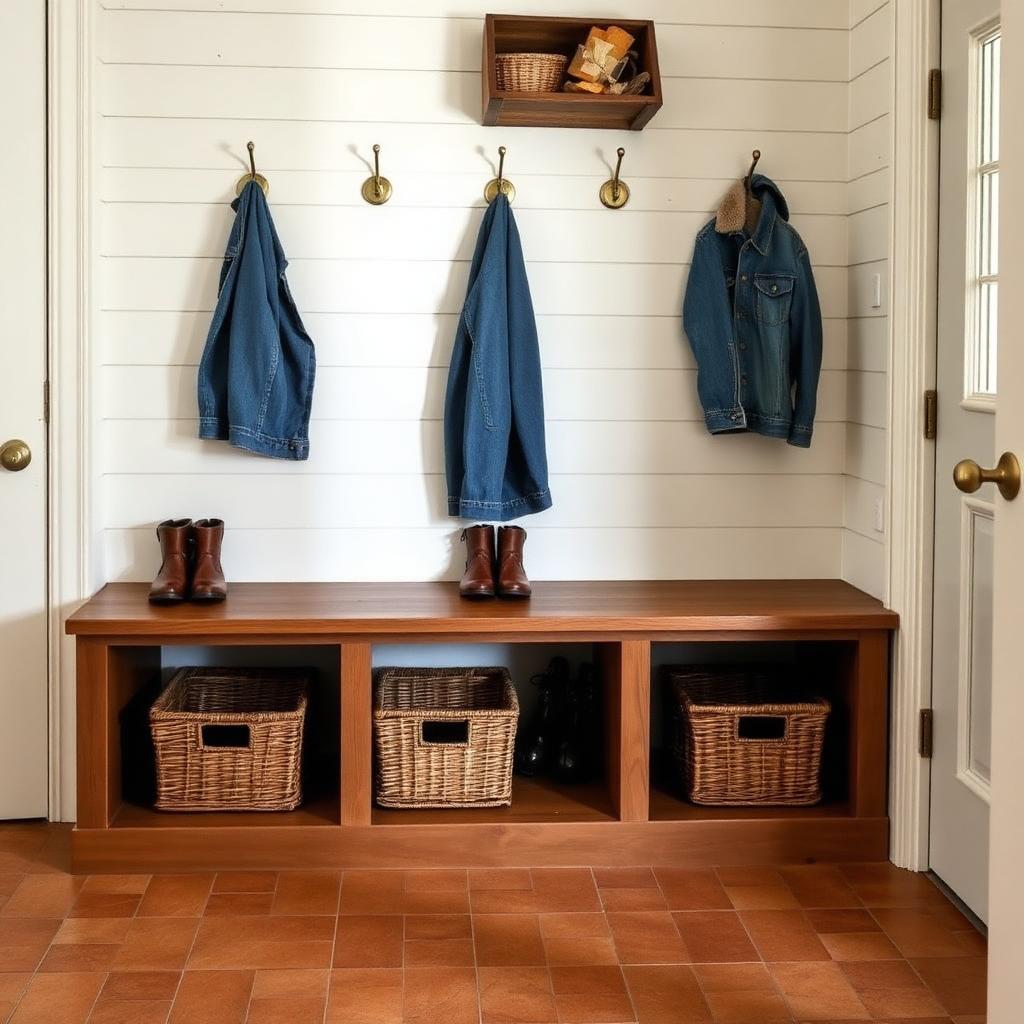
The Mudroom Bench Build That Tames Any Family Entryway
Sizing, materials, and the IKEA-hack shortcut that gets you a built-in look for under $500.
Jordan Reyes·10 min read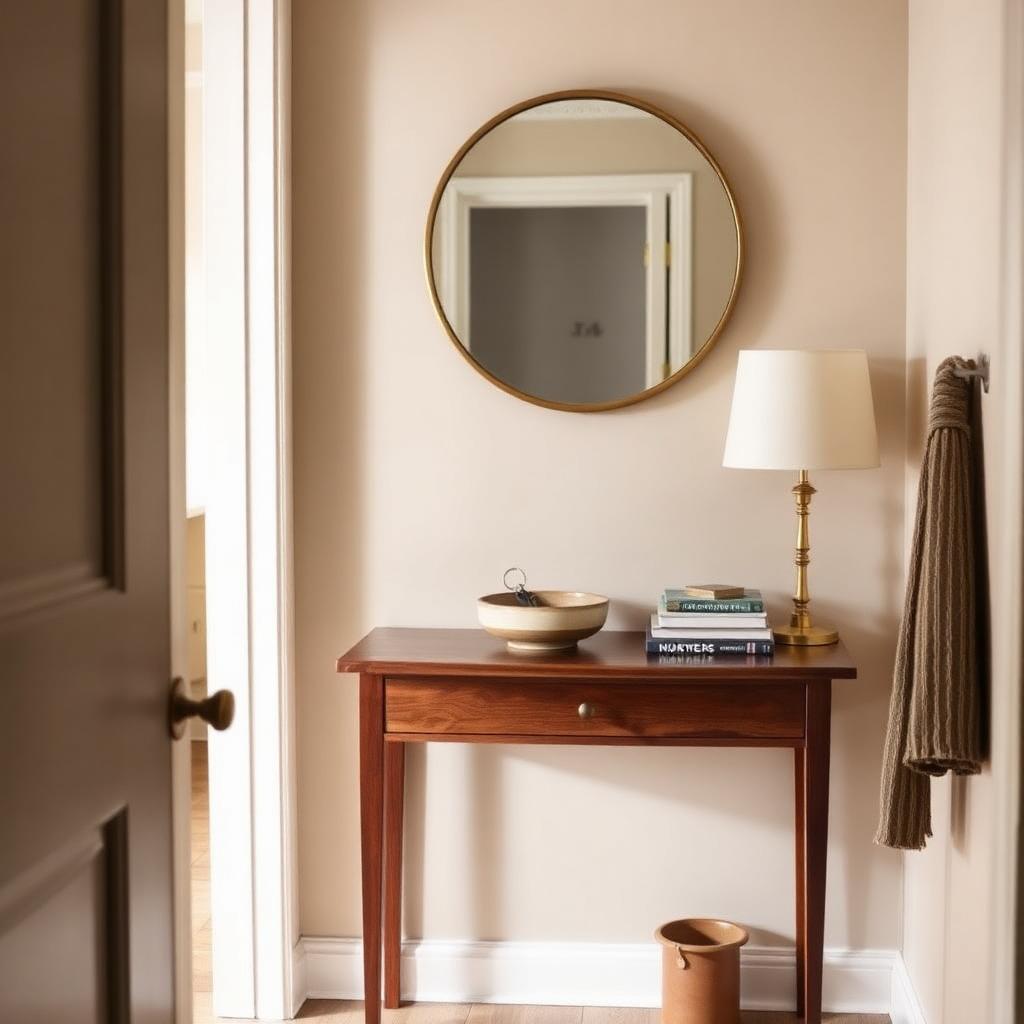
Console Table Styling: The Three-Object Triangle That Magazine Stylists Use
The formula that turns any entry table into a vignette — three heights, one mirror, and the basket below.
 Emma Clarke·8 min read