Small Bedroom Ideas 2026: Make 90 Square Feet Feel Like a Suite
Six tricks I steal from boutique hotels to make a tiny bedroom feel calm, soft, and twice its size.
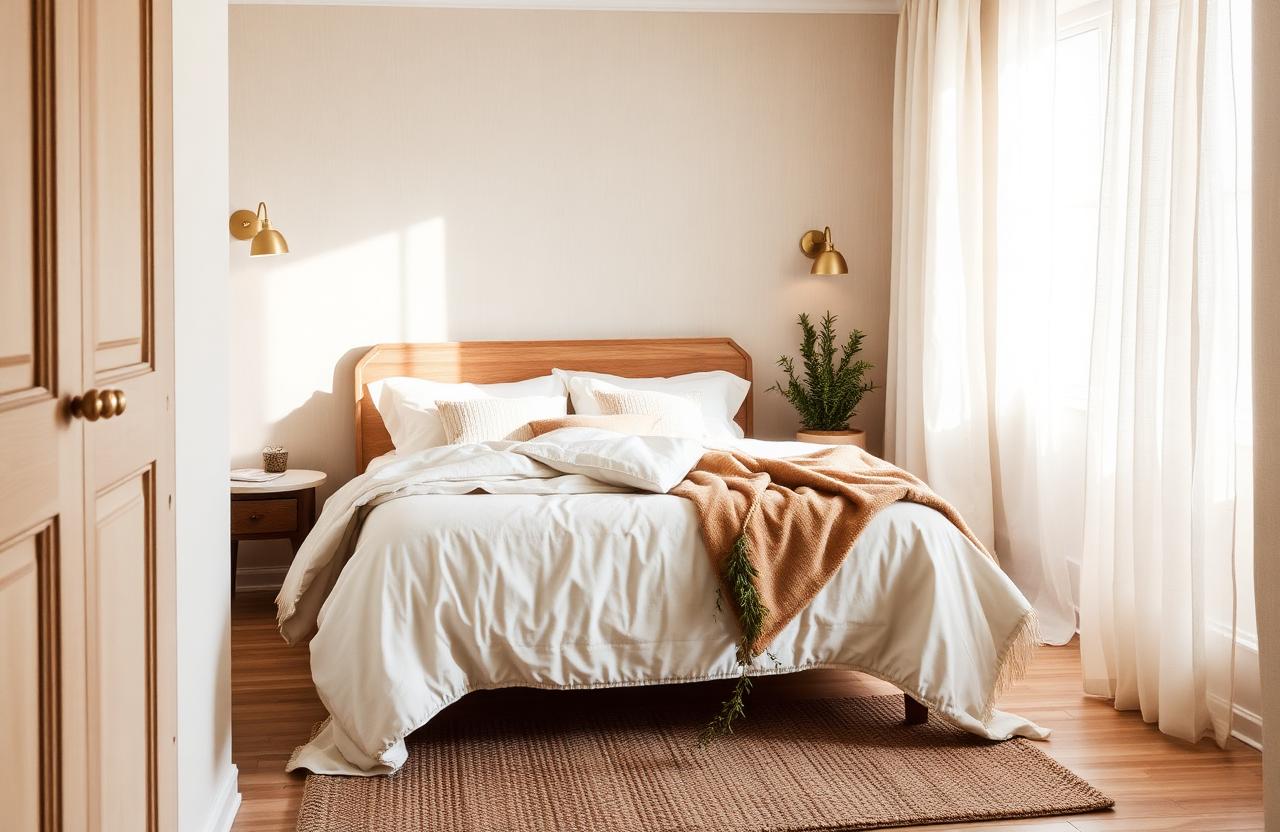
For eight years I lived in bedrooms that could charitably be described as cozy — and honestly described as a tight squeeze. Ninety square feet, no closet, a single window that faced the back of an air conditioning unit. I spent most of those years feeling cramped and defeated until I started paying attention to what boutique hotels do with the exact same amount of space. Turns out, ninety square feet can feel like a suite if you know the handful of tricks that actually work. Here are the six moves that changed everything for me, plus the mistakes I made so you don't have to.
Why small bedrooms need a different approach
The instinct in a small room is to go minimal — white walls, small furniture, nothing on the surfaces. And while clutter is indeed the enemy, stark minimalism can make a tiny space feel cold rather than calm. The better goal is layered simplicity: a few deliberate textures, warm lighting, and furniture scaled to the room rather than shrunken versions of full-size pieces. When you do that, the room feels intentionally small, not accidentally cramped.
Boutique hotels are masters of this. They take a twelve-by-twelve room and make it feel like a sanctuary, not a waiting room. They layer linens instead of piling on pillows. They use one bold piece of art instead of a gallery wall. They mount the lights on the wall to free up nightstand space. These are not expensive tricks; they're just disciplined ones.
The shift I made, mentally, was to stop apologizing for the room's size and start designing for it. A small bedroom is not a compromise; it's a constraint. And constraints make design better, not worse. Every object in the room has to earn its place, which means every object gets more attention. The result, when you get it right, is a room that feels curated rather than crammed.
Choose the bed frame carefully — it's half the room
In a ninety-square-foot bedroom, the bed takes up at least half the visual real estate. That makes the bed frame the single most important design decision in the room. My advice: go low and leggy or high and solid — not somewhere in the middle. A platform bed with visible legs makes the floor line continuous and tricks the eye into seeing more space. A tall upholstered headboard, on the other hand, makes the bed feel like a destination rather than a placeholder.
What does not work: chunky bed frames with solid bases that eat floor space, ornate four-posters that crowd the ceiling, or frames that force you to shimmy sideways to reach the window. In a small room, every inch of visual breathing room matters. I switched from a bulky metal frame to a low walnut platform bed and gained what felt like an extra foot on all sides. It was the same mattress, but the room felt completely different.
Linens do most of the heavy lifting
If you take one idea from this article, let it be this: invest in your bedding. Not a pillow mountain, not a complicated duvet arrangement — just a few high-quality basics. A linen duvet cover in a warm neutral. Two or three pillows maximum (one sleeping, one to lean against, maybe one accent). A folded throw at the foot of the bed. That is it. That is the boutique look.
I spent ten years buying cheap duvet sets and replacing them every year. Then I spent the same cumulative money on one good linen duvet cover and a pair of proper shams. Three years later they look better than they did new because linen softens over time. The room feels expensive, calm, and grown-up. No styling hacks required. Good fabric is doing the work for me.
One more note: keep the color palette tight. In a small room, visual cohesion makes the space feel larger. I stick to cream, oat, and one warm accent — in my case, a muted terracotta throw. No bold patterns, no competing prints. Just texture on texture on texture. It reads as depth without adding chaos.
Lighting that doesn't take up floor space
In a small bedroom, floor lamps are a luxury you probably can't afford — not in money, but in square footage. The solution is wall-mounted lighting. Plug-in sconces, clip-on reading lights, or pendant lights hung from a ceiling hook can give you bedside light without stealing nightstand real estate. Hotels do this because it's functional and it looks cleaner.
I use two brass plug-in sconces flanking the headboard, mounted at pillow height. The cords run down behind the nightstands — small floating shelves, really — and plug into outlets I would have used for table lamps anyway. The result: no cords across surfaces, no lamps to knock over, and a soft pool of light exactly where I need it for reading. Total cost for both sconces was sixty dollars.
The other lighting move worth considering is a dimmer. Even a basic plug-in dimmer on your sconces lets you shift the room from functional to restful without changing the bulbs. In a bedroom, especially a small one, the ability to lower the lights in the evening makes a real difference in how the space feels at the end of the day.
Use mirrors strategically but sparingly
The conventional wisdom is that mirrors make small rooms feel larger. This is true — but only if you place them thoughtfully. A mirror that reflects a cluttered corner or the back of a door will make the room feel busier, not bigger. The goal is to reflect light and depth, not chaos. Lean one large mirror against the wall opposite the window, and you will double the natural light and create the illusion of an additional opening.
I have a single floor-length mirror leaning against the wall by my closet (such as it is). It reflects the window and the headboard wall, making the room feel twice as wide when you walk in. It also doubles as a full-length dressing mirror. Two jobs, one object. That is the small-room mindset.
"A small bedroom is not a compromise — it's a constraint. And constraints make design better, not worse."
— Maya Patel
Edit ruthlessly and hide the rest
In a small bedroom, every visible surface is part of the design. That means you cannot leave things lying around and expect the room to feel calm. The solution is hidden storage: baskets under the bed, a fabric-covered bin by the door, a nightstand with a drawer instead of an open shelf. What you cannot see cannot clutter.
I use three woven baskets that slide under my platform bed to hold off-season clothes, extra linens, and books I'm not actively reading. The bed skirt is intentionally six inches off the ground so the baskets are accessible without being visible. Everything else goes in a single cloth bin in the closet. When I need to tidy the room, it takes thirty seconds because everything already has a home.
The rule I follow: if it doesn't serve sleep or getting dressed, it doesn't live in the bedroom. Work stuff, exercise gear, random mail — all of it stays outside. A bedroom is a sanctuary, especially when it's small. Protect that boundary and the room will reward you every night.
Frequently asked questions
What's the best wall color for a small bedroom?
Warm neutrals work best — think creamy white, soft oat, or pale mushroom. Pure white can feel sterile, and dark colors, while moody, need excellent lighting to avoid feeling like a cave. I painted my room a shade called 'Linen White' and it reflects morning light beautifully.
How do I fit a nightstand in a tiny bedroom?
Floating shelves are your friend. Mount a small wooden shelf at mattress height next to the bed. You get a surface for your phone, a book, and a glass of water without losing any floor space. Pair it with a wall-mounted sconce and you have a complete bedside setup in about eight inches.
Should I use a headboard in a small room?
Yes, but keep it simple. A slim upholstered headboard adds softness and makes the bed feel finished without bulking up the room. Avoid heavy wooden headboards with shelves or built-in lights — they date quickly and take up visual space you need.
How many pillows are too many?
More than three. In a small bedroom, pillow mountains overwhelm the bed and make the room feel cluttered. Two sleeping pillows and one accent pillow is enough. If you want layers, add a folded throw at the foot instead.
What if I don't have a closet?
Use a rolling rack or a wall-mounted hook rail for daily clothes. Store off-season items in under-bed bins or a separate wardrobe if you have the space. The goal is to keep your current wardrobe visible but organized, and everything else out of sight.
Final thoughts
Ninety square feet taught me more about design than any large room ever could. When space is limited, every decision carries weight. The bed frame, the linens, the light, the storage — all of it matters. But the reward is a room that feels considered, calm, and completely yours. You don't need more space; you need better choices. Start with one change this weekend — a new duvet cover, a pair of wall sconces, a single well-placed mirror — and see how the room responds. Small rooms are not sentences to serve; they're invitations to pay attention.
Pin this for later
Save this guide to your Pinterest board so it's there when the weekend hits.
📌 Pin it on PinterestWas this helpful?

Maya Patel
Bedroom & Bath Editor
Maya leads our bedroom and bathroom coverage at HomeBliss. A former boutique-hotel design consultant, she now writes about how to make small, soft, restful rooms at home without spending hotel money. She lives in a 720-square-foot London flat she shares with her partner and far too many candles.
Related articles
The Calm Bedroom Palette: 5 Colors That Sleep Researchers Love
Soft sage, dusty rose, oat — the science-backed colors that quiet a busy mind.
Maya Patel·8 min read
The Four-Layer Bedroom Method That Always Looks Designed
The stylist's formula for a bed that feels like a sanctuary — texture, weight, light, and one personal object.
Maya Patel·10 min read